
Services
Genioplasty (chin correction)
Correcting chin shape and position for facial profile harmony.
from 450 000 ₸ Performed under general anaesthesia; the price includes the clinic stay on the day of surgery
- MD surgeons
- 3D planning
- International standard
WHAT PATIENTS COME WITH
Common concerns
IN DETAIL
About the procedure in detail
What genioplasty is
What genioplasty is
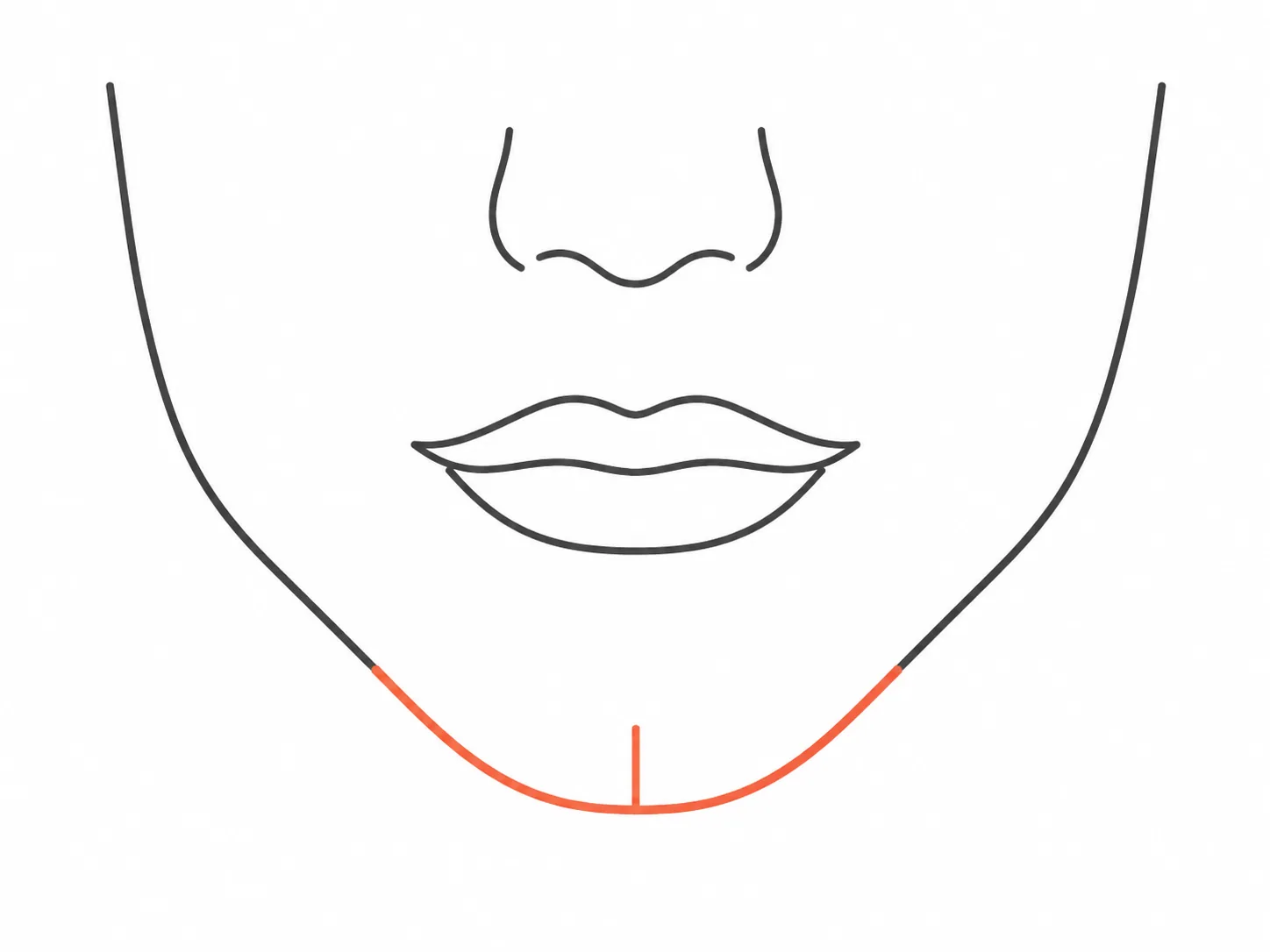
Genioplasty is an operation on the chin: the surgeon changes its shape, size or position. The chin is assessed not on its own, but in relation to the nose, the lips, the lower jaw and the neck. So the task is not to enlarge or reduce the chin, but to find the shape that suits this particular face.
Sometimes the disproportion comes not from the chin but from the position of the upper or lower jaw. Genioplasty is then combined with orthognathic surgery - or it does not solve the problem at all. This is established at the consultation.
How the consultation goes
How the consultation goes
The surgeon clarifies what exactly bothers you and assesses the face from the front and in profile: the shape, height and projection of the chin, the symmetry of the lower third of the face, the relationship of the chin to the lips, the nose and the neck, the position of the jaws, the bite, the condition of the soft tissues, the consequences of injuries and previous operations. If needed, they also look at photographs and imaging.
The main question of the consultation is whether correcting the chin is enough. If the cause lies in the position of the jaws or in the bite, the doctor will refer you to an orthodontist and propose a different treatment plan.
How the operation goes
How the operation goes
Genioplasty is performed under general anaesthesia. The method and the scope are chosen in advance - according to the shape of the chin, the structure of the facial skeleton, the bite and the planned profile. The correction can change the size, shape, height, projection or symmetry of the chin.
The approach most often goes from inside the mouth, so there is usually no external scar on the skin. The duration depends on the complexity of the correction and on whether genioplasty is done on its own or together with another procedure.
There is no single method that suits everyone. The surgeon explains before the operation what will suit you, what the limitations are and what changes to expect.
Safety and risks
Safety and risks
Before surgery the patient undergoes a mandatory preoperative examination: it is needed to assess general health, rule out contraindications and prepare for the anaesthetic. During the operation the anaesthesiologist monitors breathing, heart rhythm, blood pressure and oxygen levels.
As with any operation, genioplasty carries risks: bleeding, infection, prolonged swelling, asymmetry, changes in sensitivity, particular features of healing and, in some cases, the need for an additional correction. The surgeon names your risks before the operation, not after.
Recovery
Recovery
In the first days there is swelling, a feeling of tightness, moderate soreness and a temporary change in the sensitivity of the lower lip and the chin. The doctor prescribes medication, a gentle diet and careful oral hygiene.
After that the swelling subsides and wellbeing improves. The sutures are usually absorbable and do not need to be removed. After an isolated genioplasty many patients return to quiet work after about seven to ten days, if they feel well enough.
The contours of the chin emerge as the swelling goes down. Preliminary changes are visible in the first weeks; the final result is assessed after several months. The timing depends on the scope of the operation and on the particular features of healing.
Sources of medical information
Sources of medical information
The text has been prepared from materials of the British Association of Oral and Maxillofacial Surgeons, Cambridge University Hospitals and the American Society of Plastic Surgeons and adapted for this website. It does not replace an in-person consultation with a doctor.
The result is always individual and depends on the diagnosis, the preparation, the scope of treatment and the recovery.
FIND YOUR TREATMENT
Not sure what suits you?
Take this self-check - 7 questions to help you recognise signs that are worth discussing with an orthognathic surgeon.
HOW TREATMENT WORKS
How treatment works
-
01
Consultation
The doctor assesses the facial profile, the chin, the bite and the position of the jaws
-
02
Diagnostics
Imaging and photo analysis show whether correction of the chin alone is enough or a broader treatment plan is needed
-
03
Treatment plan
The doctor explains what suits the case - chin correction on its own or treatment combined with bite correction
-
04
3D modelling
The position of the chin and the future facial profile are planned
-
05
Surgery
The surgical correction is performed according to an individual plan
-
06
Recovery and follow-up
The doctor monitors healing and supervises recovery
BENEFITS
Benefits
An assessment of the whole profile
Correction without a template
3D modelling
A natural result
The link with the bite
A maxillofacial surgeon
Anaesthesia support
A licensed operating room
Follow-up after surgery


BEFORE AND AFTER
Results
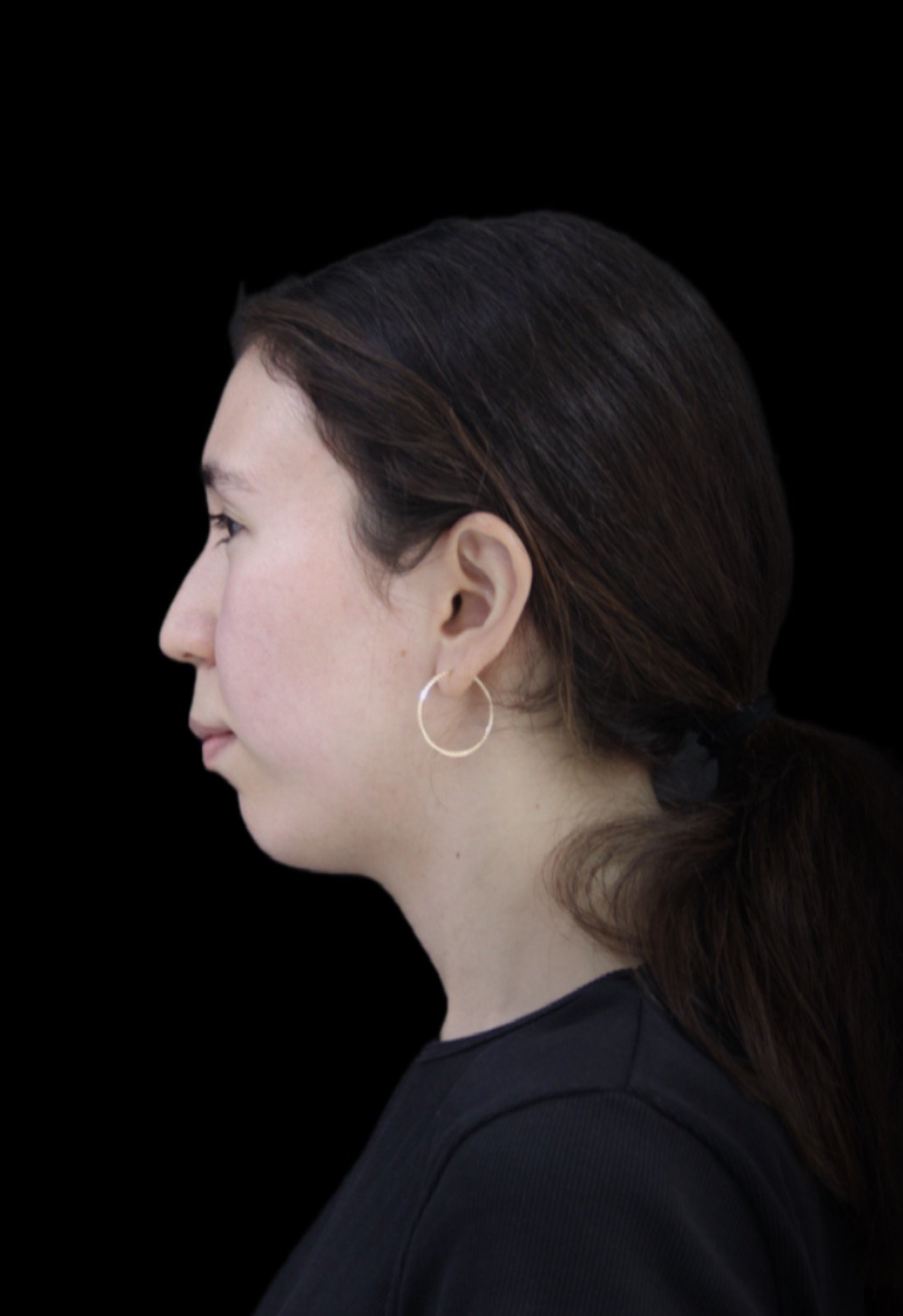
Sensitive content
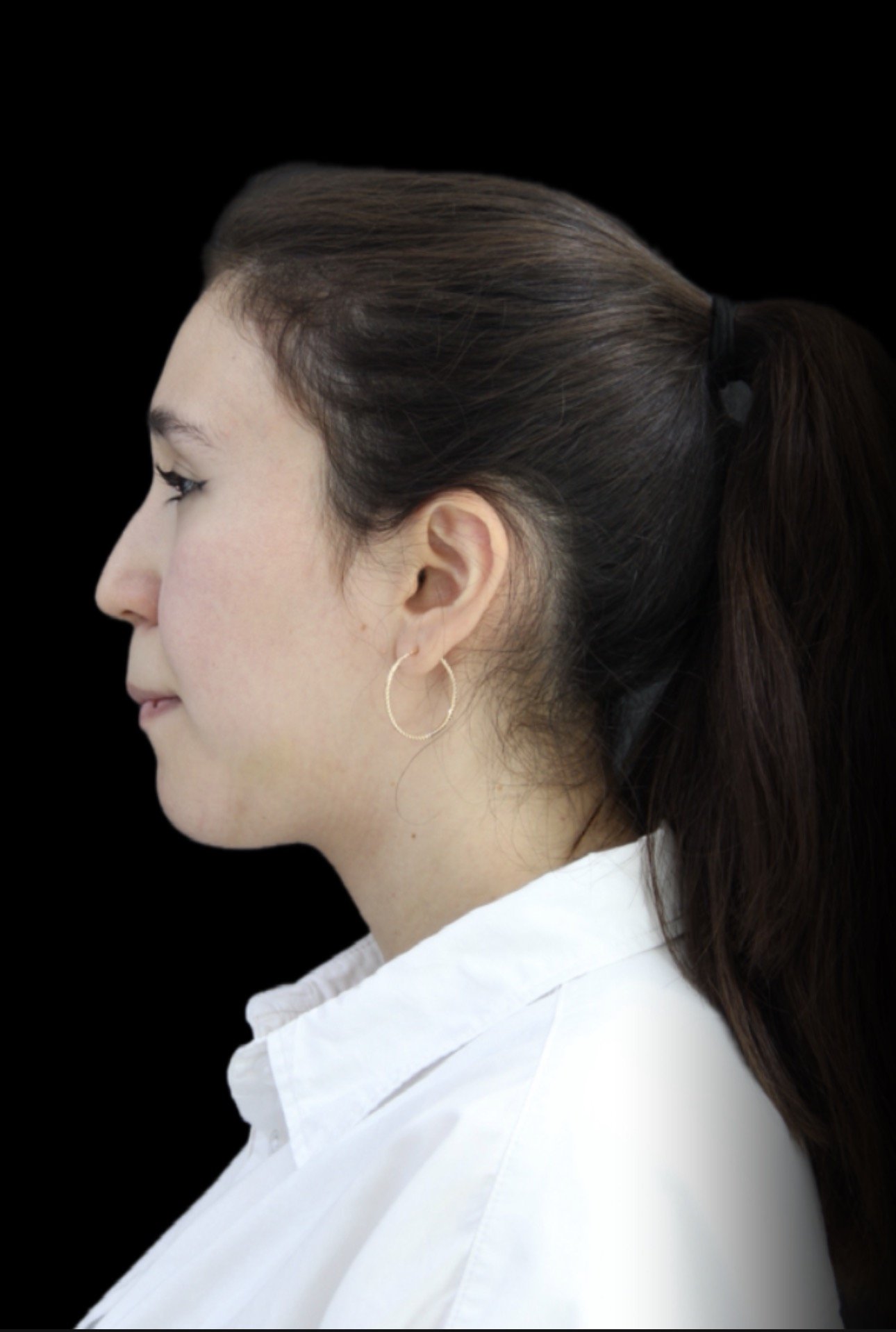
The result is individual and depends on the starting condition, the extent of the surgery and following the doctor's recommendations.
REVIEWS
Patient reviews
My chin had receded my whole life, making my profile look weak. I had considered fillers but the surgeon explained that an osteotomy was needed for a lasting result. I agreed and have no regrets. The profile is now balanced and the lower third of my face is properly proportioned. I am happy with both the process and the result.
My chin looked small in every photo and I'd been self-conscious about it for a long time. At the consultation the surgeon assessed the whole profile, not just the chin, and offered a specific plan. The surgery went without complications and recovery took about two weeks. My profile looks balanced now, and I've finally stopped avoiding side-angle photos.
I tried chin fillers twice, but the effect didn't last long and I wasn't happy with the shape. The surgeon explained the difference between temporary and surgical correction and showed on a model how my profile would change. I went ahead with genioplasty - the result has been stable for several months now and looks natural; none of my friends noticed anything was done.
QUESTIONS
Frequently asked questions
How is genioplasty different from jaw surgery?
Genioplasty changes the shape, size or position of the chin. If the disproportion is caused by the position of the upper or lower jaw and by the bite, orthognathic treatment or a combination of methods is considered.
Will an external scar remain?
An approach from inside the mouth is used most often, so there is usually no external scar on the skin of the chin. The surgeon explains the details of the approach at the consultation.
Will the face look natural?
The aim of genioplasty is to improve facial proportions while preserving individual features. The scope of correction is calculated taking into account the initial anatomy, the position of the jaws and the relationship between the chin and the other structures of the face.
Will it be obvious that surgery was done?
Once the swelling has gone down, the changes should be perceived as part of the overall facial proportions. How great the change is depends on the initial shape of the chin and on the planned scope of correction.
How painful is the recovery?
In the first days there may be moderate soreness and a feeling of tightness. They usually decrease gradually and are controlled with the medication prescribed by the doctor.
Can the sensitivity of the chin and the lower lip change?
After surgery sensitivity may be temporarily reduced or altered. In many patients it gradually returns, but the timing is individual. A longer-lasting change in sensitivity is one of the possible risks of the operation.
Do the stitches need to be removed?
With an approach from inside the mouth absorbable sutures are usually used - as a rule they do not need to be removed.
When can I go back to work?
After an isolated genioplasty many patients return to quiet work after about seven to ten days. Slight residual swelling may persist for longer.
When will the swelling go down?
The most noticeable swelling usually remains during the first days and then gradually decreases. Most of it passes within the first weeks; the final recovery of the tissues takes longer.
Can chin asymmetry be corrected?
Genioplasty is used to correct asymmetry and displacement of the chin. How much can be corrected depends on the cause of the asymmetry and on the structure of the whole facial skeleton.
When is genioplasty alone not enough?
When the disproportion is related to the position of the lower or upper jaw, to the bite or to a pronounced asymmetry of the whole face. In that case orthognathic treatment or a combination of several methods is considered.
Does the result last?
Once healing is complete, the result of genioplasty usually lasts for a long time. The face, however, continues to change naturally with age.
Can genioplasty be combined with another operation?
When there are indications, genioplasty is combined with orthognathic surgery or with other facial procedures. The decision is made after assessing the anatomy and the general health of the patient.
MORE SERVICES
You may also be interested in


CONSULTATION
Book a Consultation
Free specialist advice