
Services
Surgical bite correction (orthognathics)
Orthognathic surgery for significant bite anomalies where braces have failed.
from 1 000 000 ₸ The final price depends on the scope of surgery and on the treatment plan. The doctor will give the exact amount after the consultation and diagnostics.
- Maxillofacial surgeons
- 3D surgical planning
- Modern methods of jaw correction
WHAT PATIENTS COME WITH
Common concerns
Types of bite disorders
Types of bite disorders
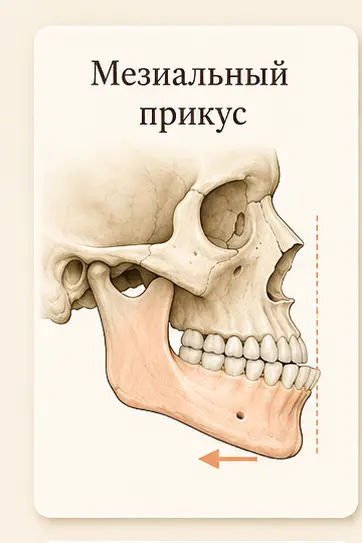
Mesial bite
The lower jaw and the lower teeth are positioned forward relative to the upper ones.
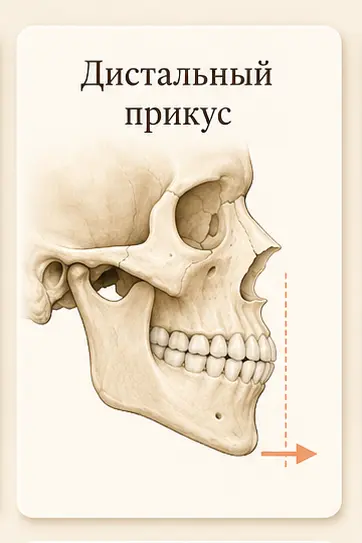
Distal bite
The upper jaw or the upper teeth project noticeably forward, while the lower jaw is set back.
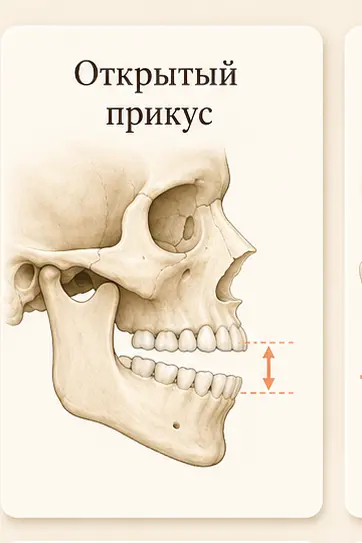
Open bite
A vertical gap remains between the upper and lower teeth - they do not meet.
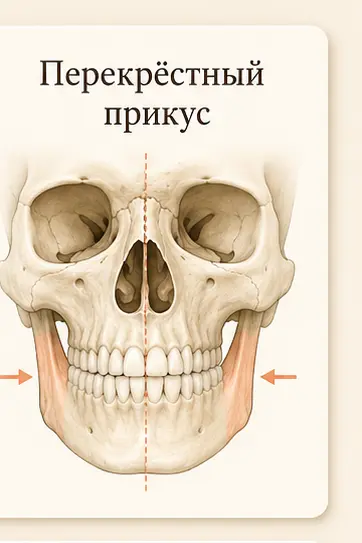
Cross bite
The dental arches are shifted sideways, and the upper and lower teeth overlap incorrectly.
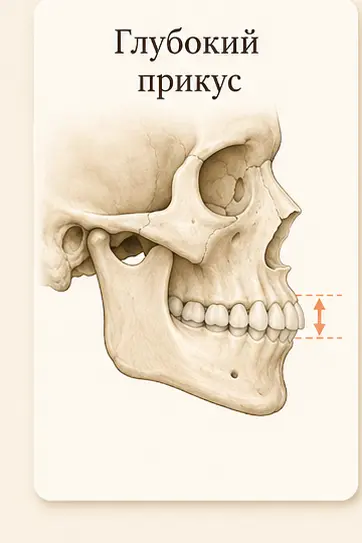
Deep bite
The upper front teeth overlap the lower ones too far.
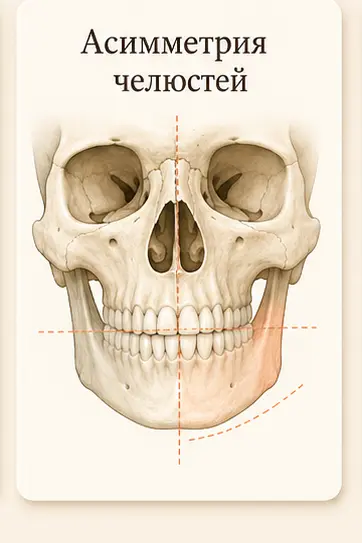
Jaw asymmetry
The jaws or the chin are shifted to one side and the face looks asymmetric.
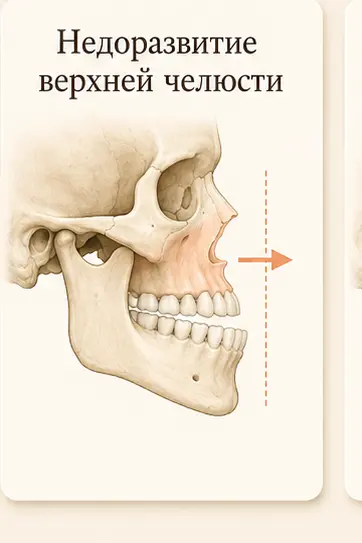
Underdevelopment of the upper jaw
The upper jaw is insufficiently developed and the proportions of the middle part of the face are disturbed.
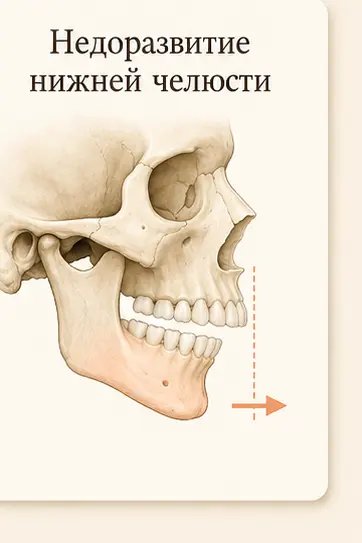
Underdevelopment of the lower jaw
The lower jaw is insufficiently developed and the chin looks as if it slopes backwards.
IN DETAIL
About the procedure in detail
What orthognathic surgery is
What orthognathic surgery is
Orthognathic surgery returns the upper and lower jaw to the correct position. It is performed when a wrong bite is caused not by the tilt of the teeth but by the development or the position of the jaws themselves: in that situation braces and aligners move the teeth but do not remove the cause.
The aim of the operation is to restore the anatomy: to normalise the way the teeth meet, chewing, speech, breathing and the work of the temporomandibular joints. Facial proportions change as well, but as a consequence of the correct position of the jaws, not as a task in its own right.
Most patients are not looking for "orthognathic surgery" - they are looking for a solution to their problem. That is why the consultation begins not with a discussion of surgery but with a search for the cause.
When braces are not enough
When braces are not enough
Surgery is not needed by every patient with a wrong bite: in many cases orthodontic treatment is enough. Surgical treatment is considered when the cause lies in the position of the jaws - pronounced facial asymmetry, a jaw that projects forward or recedes, teeth that do not meet, lips that do not close at rest, disturbed chewing and speech, overload of the temporomandibular joint, congenital features of the facial skeleton, the consequences of injuries.
The decision is taken by the maxillofacial surgeon and the orthodontist together. Only then does it become clear whether the bite can be corrected without surgery.
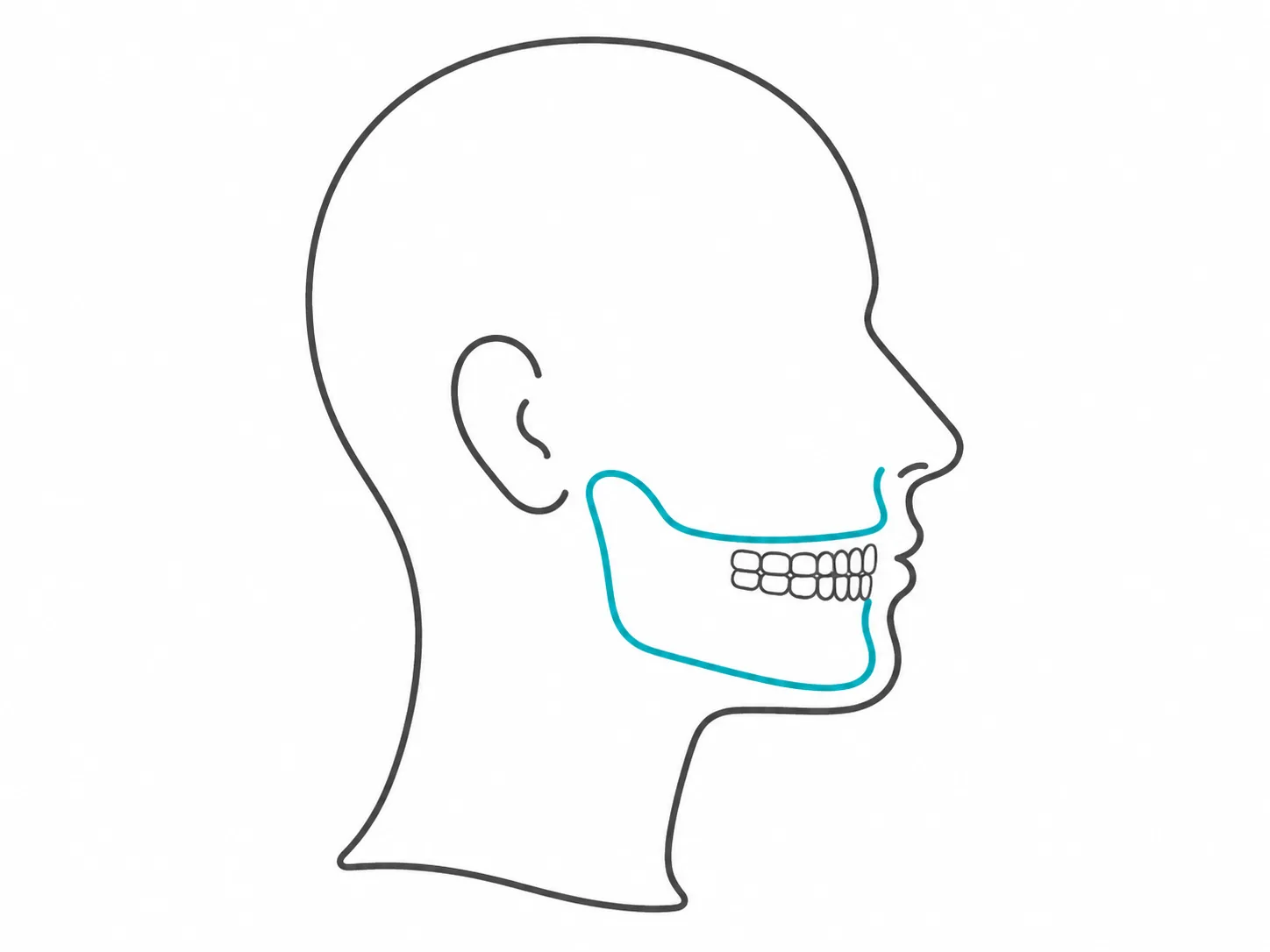
Why the surgeon and the orthodontist lead the treatment together
Why the surgeon and the orthodontist lead the treatment together
The orthodontist prepares the dental arches for the new position of the jaws and completes the treatment after the surgical stage. The surgeon returns the jaws to the correct position and makes sure the teeth meet.
These tasks cannot be separated: if the teeth are not prepared, the bite will not come together in the new position of the jaws. After surgery, intermaxillary elastics are used where necessary, and they help to form the final bite.
How the consultation goes
How the consultation goes
The doctor goes through the complaints and expectations and assesses the bite, the position of the upper and lower jaw, facial symmetry, the profile, the position of the chin, the smile, the work of the temporomandibular joints and the condition of the dental arches.
A computed tomography scan is needed for the treatment plan, as well as photographs of the face and the dental arches: they are used to analyse the anatomy and to plan the operation on a digital model.
After the examination the patient receives answers to the main questions - whether surgery is needed, whether it can be avoided, whether braces will be required, how many stages there will be and how long the whole path will take.
How the operation goes
How the operation goes
The operation is performed under general anaesthesia. Most of the access is made through the mouth, so as a rule no external scars remain.
The jaws are set in the position calculated in advance on a digital 3D model and fixed with titanium plates and screws. After the operation the patient stays under the observation of the medical staff.
The duration of the orthodontic preparation before surgery and of the treatment after it is always individual - it is set by the treatment plan.
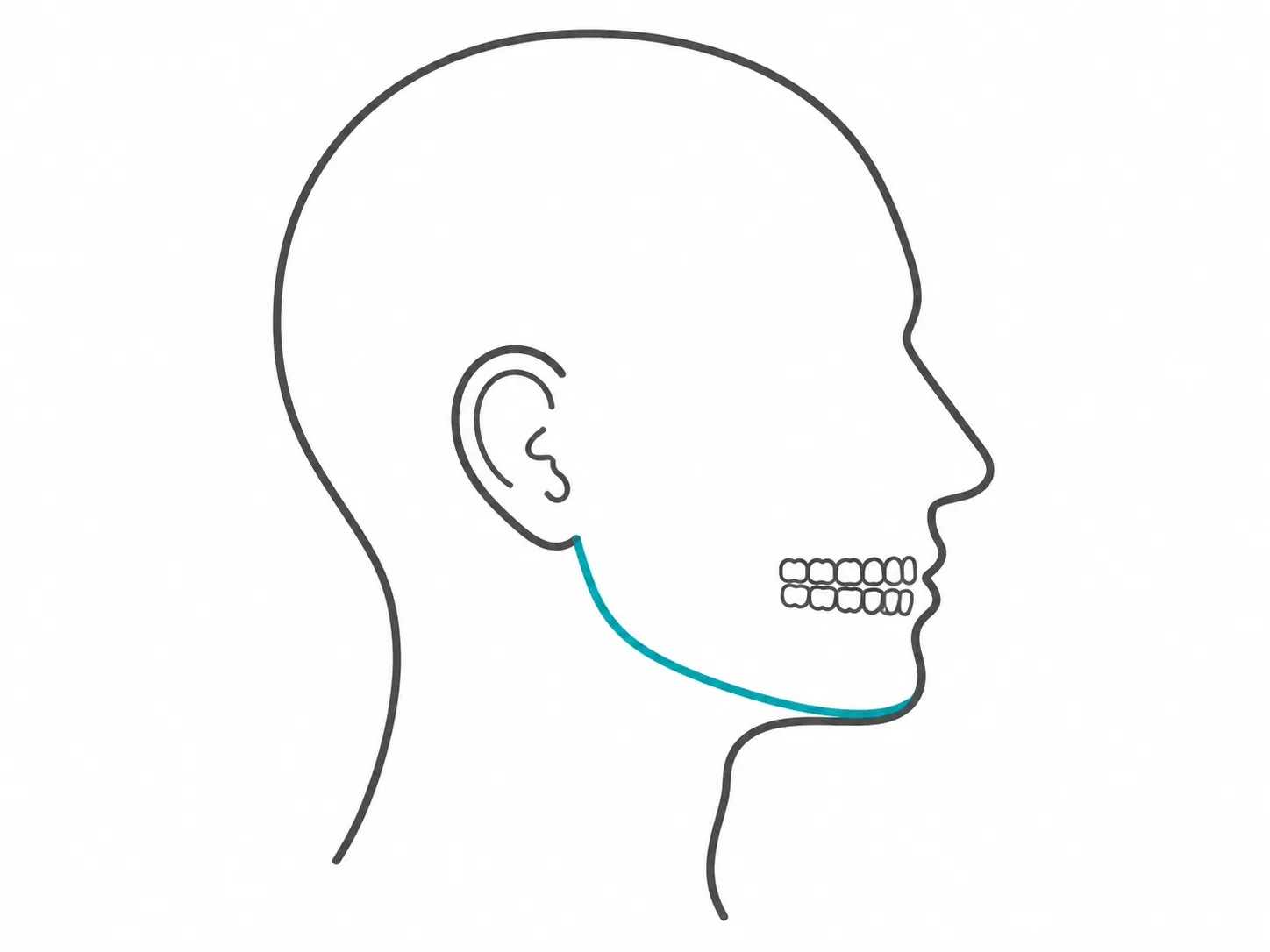
Safety
Safety
A preoperative examination is always carried out before surgery: it shows whether surgical treatment is safe for this particular patient. During the operation the anaesthesiologist continuously monitors breathing, cardiac activity, blood pressure, blood oxygen saturation and other vital signs.
Like any surgical intervention, orthognathic surgery carries risks. Diagnostics, digital planning, work according to international protocols and following the doctor's recommendations reduce the likelihood of complications but do not remove it. The surgeon goes through the risks that apply to the particular patient before the operation.
Recovery
Recovery
Recovery times depend on the scope of surgery and on the features of the body.
In the first days swelling and a feeling of tightness appear in the area of the face - this is a natural reaction to the intervention. The patient receives recommendations on nutrition, oral care and daily routine.
During the first week the swelling reaches its peak and begins to decrease. By that point most patients already manage on their own and gradually return to their usual activity. After that the swelling subsides further, the doctor carries out follow-up examinations and assesses healing.
Over the following months the body adapts to the new position of the jaws, the orthodontist brings the bite to a stable meeting of the teeth, and the final result gradually appears.
The result is always individual and depends on the diagnosis, the preparation, the scope of treatment and the recovery.
7 QUESTIONS
Bite correction: where to start?
Answer seven questions about your bite, chewing and facial symmetry. Based on your answers we will tell you whether it is worth coming to us for a consultation.
Take this self-check - 7 questions to help you recognise signs that are worth discussing with an orthognathic surgeon.
HOW TREATMENT WORKS
How orthognathic treatment goes
Surgery is one of the stages. Diagnostics and preparation come before it, and after it treatment continues until the teeth meet correctly and stably.
-
01
Consultation
The surgeon and the orthodontist assess the bite and the position of the teeth and jaws. They explain whether the problem can be solved without surgery.
-
02
Diagnostics
The necessary imaging, photographs of the face and the bite, scanning of the teeth and other examinations are carried out as indicated.
-
03
Treatment plan
The surgeon and the orthodontist determine the sequence of preparation and the expected scope of surgery.
-
04
Preparing the teeth
The orthodontist prepares the position of the teeth for the future movement of the jaws.
-
05
3D planning
Before surgery the doctor models the new position of the jaws and checks how the teeth will meet.
-
06
Surgery
The surgical correction is performed under general anaesthesia after examination and preparation of the patient.
-
07
Recovery and continued treatment
After surgery the surgeon monitors healing. The orthodontist continues to work on the position of the teeth so that they meet correctly in the new position of the jaws.
BENEFITS
What matters in orthognathic treatment
A single treatment plan
Experience with complex cases
Modern methods of jaw correction
3D surgical planning
An experienced anaesthesiologist
Follow-up after surgery


BEFORE AND AFTER
Results
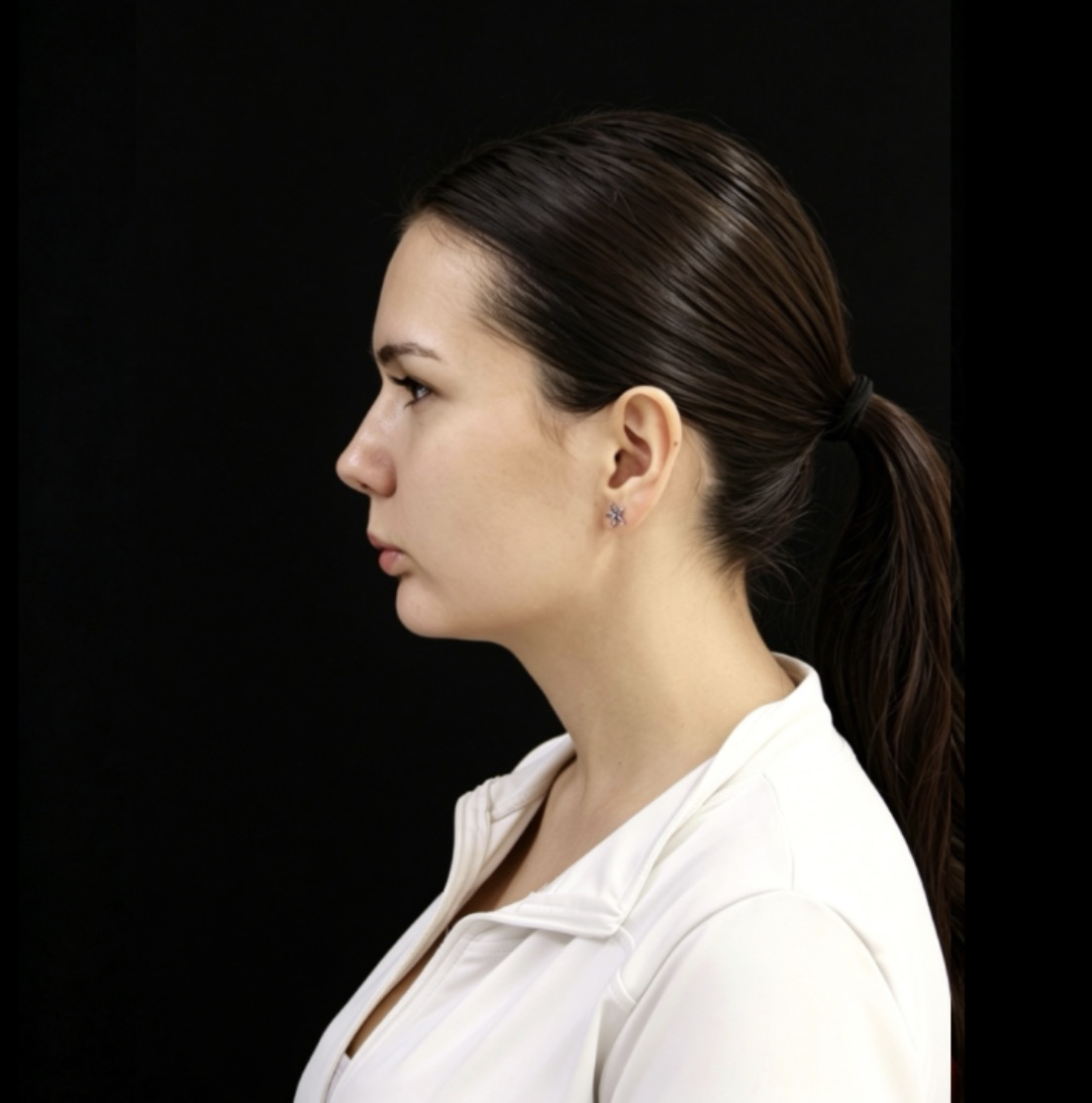
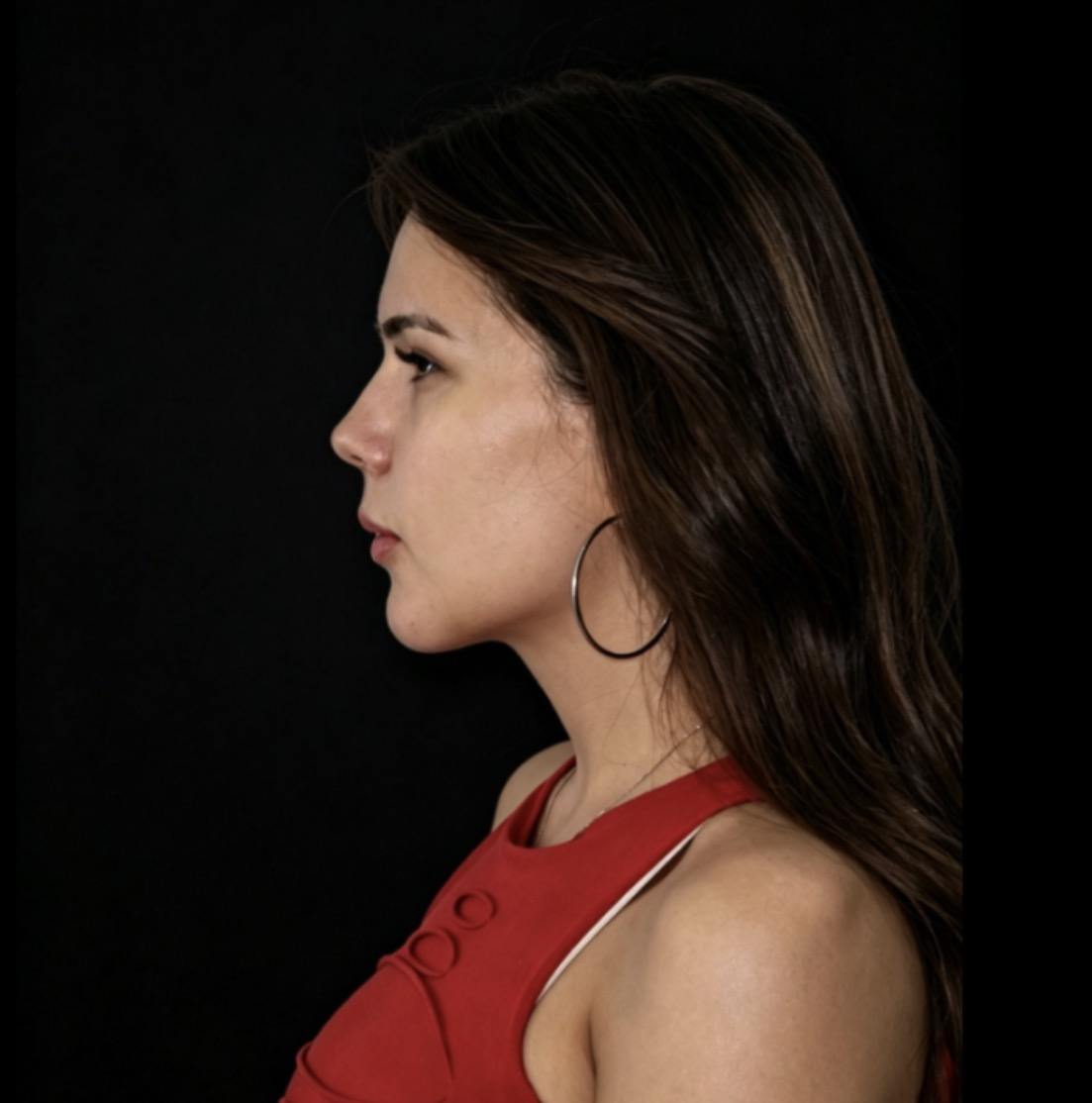
Sensitive content
The result is individual and depends on the starting condition, the extent of the surgery and following the doctor's recommendations.
REVIEWS
Patient reviews
I went to orthodontists for years but braces never corrected my bite. A friend told me about orthognathic surgery and I decided to go for it. The entire process from diagnostics to surgery was clearly explained and planned. My teeth close properly for the first time in my life and my profile looks completely different. I am very grateful to the clinic team.
My bite had bothered me since I was young - chewing was uncomfortable, and braces at another clinic gave no result. At the consultation they went through the imaging in detail and explained that symmetry couldn't be restored without surgery. I decided on orthognathic surgery, and the whole process followed the plan they described beforehand. My teeth now close normally, and I'm getting used to the new sensation.
I thought about jaw surgery for several years but was afraid to decide. The doctor calmly explained every stage at the consultation and answered questions without rushing. Diagnostics showed the problem really was the jaw position, not just the teeth. The first weeks after surgery weren't easy, but the result was worth it - my profile is more balanced now and chewing is easy.
QUESTIONS
Frequently asked questions
Can the bite be corrected without surgery?
Not always - the surgeon and the orthodontist decide this together at the consultation, after assessing the cause of the problem.
Do I need to wear braces?
In most cases yes, before and after surgery. The orthodontist draws up the exact plan individually.
Will my face change?
Yes. Once the position of the jaws is corrected, facial proportions change. The changes are aimed at restoring natural anatomy and harmonious facial features, without an artificial look.
Will any scars remain?
In most cases no external scars remain, because the surgical access is made through the mouth.
Are the plates visible after surgery?
No. The titanium plates sit inside the tissues and are not visible from the outside.
Do the plates need to be removed?
In most cases there is no need to remove them. That decision is made only when there are medical indications.
Will it hurt?
During the operation the patient is under general anaesthesia and feels nothing. Afterwards there may be temporary discomfort, which is controlled with modern painkillers.
How long does the swelling last?
The most pronounced swelling is seen in the first days after surgery and then gradually decreases. The tissues recover fully step by step, and that takes longer.
Will my speech change?
Temporary changes in speech are possible during recovery. Once treatment is complete, most patients adapt fully to the new position of the jaws.
When can I go back to work?
The timing depends on the scope of surgery, on the kind of work you do and on individual features of the body. The doctor gives precise recommendations after surgery.
When can I do sport?
Physical activity is resumed gradually and only after the treating doctor allows it.
Can a wrong bite come back?
With correct treatment planning, joint work by the surgeon and the orthodontist and adherence to all recommendations, the result achieved usually stays stable.
MORE SERVICES
You may also be interested in


CONSULTATION
The first step is a consultation
The doctor will assess your bite and your imaging, explain whether the problem can be solved with braces or whether surgery is needed, and describe the further stages of treatment.